Who Invented the Advent Calender?

For many children around the world, one of the biggest sources of excitement during the holiday season, is the Advent Calendar. Parents buy or make them every year for their children to count down the days until Christmas Eve. There are various options in size, material and content. But no matter what style the parents choose, the most important part is the opening of one door each day starting on December 1st.

But who invented it? It is a true German Christmas tradition. The origins of the Advent Calendar go back to the German Lutherans. The first style, which was used by religious families in the 19th century, was simply to draw a chalk line for every day in December until Christmas Eve. Other families would light a candle every day and put it on a wooden structure, known as the Advent Clock.

The first printed Advent Calendar was made by a Swabian parishioner, Gerhard Lang, in 1908. Lang first produced a board where 24 pictures could be afixed, and several years later added 24 doors. After producing 30 different designs, Lang’s company went out of business and had to close in the 1930s. After World War II this successful tradition was reintroduced in 1946. The first Advent Calendar filled with chocolate was available in 1958.

Today Advent Calendars consist of two pieces of cardboard glued together where 24 doors are cut out in the top layer showing a picture in each. One door is opened every day until Christmas Eve. The last door, number 24, usually is the largest door with either a surprise or a traditional picture of the birth of Jesus Christ.

December in Trademark History

On December 1, 1948, a very famous board game was copyright registered: Scrabble.


However, as we know the day an invention is registered is not necessarily the day it was invented. In 1938, architect Alfred Butts created a game which he originally called “criss-crosswords”. It was played on a 15×15 grid game board with a crossword layout. Butts manually tabulated the frequency of letters in words using examples from dictionaries and various newspapers like the New York Times.


In 1948, James Brunot bought the right to manufacture the game and paid a royalty fee to Butts. He left the rules of the game practically unchanged and called it “scrabble”. This new name comes from a real world which means “to scratch frantically”. The big breakthrough came in 1952, when the president of Macy’s placed a big order and put it in his stores. Today, the manufacturing rights of U.S. and Canada belong to Hasbro, whereas Mattel provides the rest of the world with this famous game.


For those of you that might not know the game, the main goal is to collect points. Commonly used letters like A and E have lower values than less used letters like Y or Z. And of course there are tournaments and world records in the Scrabble world. The 2011 Scrabble World Championship took place in October this year in Warsaw, Poland, and was won by Nigel Richards of Australia, becoming the first ever two time Scrabble World Champion.

For this and many other reasons December has always been a great month in trademark history.

The Inventors Hall of Fame

Have you ever visited the United States Patent and Trademark Office in Alexandria, VA? If you are an inventor or just interested in inventions and novelties, the National Inventors Hall of Fame and Museum might be worth a trip. It is situated in the atrium of the Madison Building, where the USPTO’s headoffice is located.

The Inventors Hall of Fame shows five elements, which are the Hall of Fame, Museum, a Portrait Gallery, a Theatre and a Museum Store.
In the Hall of Fame over 400 displays show famous American Inventors and their inventions. Interactive kiosks also help the visitor to understand the idea, how it was developed and how it changed the lives of each inventor.
In addition, rotating exhibitions are included in the Museum, featuring different themes. ‚Exercising Ingenuity: Inventions in Health and Fitness‘ is the name of the current exhibition. It highlights the historic advances, current trends and future technologies relating to a healthier body and mind.


The Portrait Gallery features digital electronic portraits of United States Presidents Thomas Jefferson and James Madison; famous inventor Thomas Edison; National Inventors Hall of Fame Inductees Helen Free, developer of self-testing for diabetics, and Steve Wozniak, the inventor of the personal computer and co-founder of Apple Computer; and Under Secretary of Commerce for Intellectual Property and Director of the USPTO David Kappos

The Museum Store offers a large selection of unique merchandise including apparel, books, invention kits, glassware, jewelry, and desk accessories. Many items feature the official USPTO seal.

An Invention to Help a Friend

While we earlier looked at the worst inventions that can be a threat to health and life, there were also some great ideas this year.

When looking at the science sector, we see some great things coming out of people’s garages and workshops. „Popular Science“ magazine’s yearly Invention Award honors inventions which treat the sick, save the world or simply are fun to play with. Every year 10 truly dedicated inventors receive this special award to show the brilliance and the inspiration behind it.

Among these true geniuses is Mark Stark, who developed the Stark Hand. The concept of an artificial hand might not be entirely new, but this one is better and stronger in quality and still cheaper that everything else on the market. Mark Stark developed this hand to help his friend Dave Vogt, who was born without a left hand. In 2004, Stark constructed it from hardware-store supplies and gave it to Vogt to try out. Within an hour, Vogt caught a ball with his left hand for the first time in his life. Since then, they have been working together to improve it and to construct four more prototypes.

Another improvement had to be made when Dave swung around on the dancefloor. He hit the hand against a wall and a prosthetic knuckle broke, which led Stark to strengthen the joints. Mark Stark invested 7 years and $18,000 to develop the Stark Hand and is in negotiations for a licensing agreement with a major prosthetics manufacturer.

We are keeping our fingers crossed, prosthetic or otherwise.

Inventions for Traveling

The article „The Travel Inventions we Really Need“ describes inventions frequent travelers came up with to make our lives easier. The famous Jetpacks are not always part of it.

Electronic consumer goods like laptops, iPads and Kindles give us the opportunity to travel lighter and can be even seen as prerequisites to keep us from hanging around airports and being super bored.

But what about a navigation system that reassures you that you are going the right way? Or a plastic bag that does not make any noise to avoid waking up the entire dorm in the hostel?

Innovations in the travel industry have come a long way, but there is still room for more. If we look back ten years, traveling by car, train or plane seemed less comfortable, required greater preparation and was less flexible. Today we book flights on our smart phones, check in online and get to the airport 30 minutes prior to take off. We don’t have to pack way in advance to make sure we have everything. Everything and anything can be bought, ordered or picked up along the way.

Have you ever wondered why you still need to take off your belt and shoes every time you go through security at the airport? We are in the 21st century and one would think that by now, a machine had been invented that knows the difference between a harmless belt and dangerous goods.

The 50 Worst Inventions

Time Magazine recently published a list of the 50 worst inventions that were ever patented.

Amongst them are dangerous ideas that killed their inventors like Reichelts parachute jacket.

Franz Reichelt, an Austrian-born, French tailor was thrilled about the idea of a jacket, that opens into a parachute. It could be worn in emergency, for example when evacuating airplanes and allow the passengers to survive a fall from a great height. He had tested it by throwing puppets with parachutes out the window of his 5 story building. But in order to prove it, he decided to jump off the Eifel tower with the parachute jacket allowing him to slowly float to the ground. Unfortunately the invention failed and Reichelt died on February 4th, 1912.

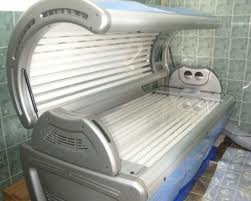
Another dangerous invention listed by Time Magazine is the tanning bed. Although it is not secret that the overuse of a tanning bed can cause major skin damage, however it is said, that 90% of skin cancer incidents are the direct result of UV radiation. Tanning beds were first brought to America in 1979 by inventor Friedrich Wolff, who patented his particular blend of phosphor for fluorescent lamps in order to create UV which is similar to the sun. The result is a cosmetic tan.

Despite all the dangerous aspects, there is also a positive side to this invention. It is used for medical treatment of certain illnesses. But most importantly sun light affects the Vitamin D synthesis in our bodies which has a wide range of positive health effects like inhibiting the growth of cancer.

To learn more about the 48 remaining worst inventions please also see: Time Specials: The 50 worst inventions

Tune in and get help.

Got Invention Radio is a radio show, that offers a program dedicated to all inventors and entrepreneurs. In their weekly show experts, successful inventors and business mentors share their experience and resources to help with ideas and inventions.

Tune in on Thursdays at 8pm E.T./5pm P.T. on www.gotinvention.com to follow the show hosted by Brian Fried. Listeners can also email or call in and ask questions during the show.

The radio host Brian Fried is an inventor himself and founder of the company Think Up Design. He holds 4 patented inventions and 3 additional inventions that are patent pending. After many years of lecturing in libraries, for inventor groups and several schools, he started a live weekly radio show called Got Invention Radio and has recently partnered up with Inventors Digest.

In the last show on September 29, 2011 he welcomed United States Patent & Trademark Office Commissioner Bob Stoll to talk the latest new in the United States Patent laws. They discussed how the new law, which was signed by President Barack Obama on September 16, will give more certainty for patent applicants and owners and also provide the USPTO with the needed resources to work more efficient when issuing patents.

In his next show on December 1, 2011 Brian will introduce Survey Monkey, a system to prepare a survey and get the public’s opinion about your invention.

Inventors in Paradise : Edison & Ford Winter Estates, Fort Myers, Florida

Did you know that Edison is the only American who filed a patent each year for 65 consecutive years? That he was awarded 1093 United States patents throughout his life?

Edison is most famous for inventing the first commercially available incandescent light bulb, but his favorite invention was the phonograph. His work also included improvements on the telegraph, generator, motor, movie making, batteries, cement and the search for a domestic source of rubber. The list goes on and on, as he consistently worked on finding solutions to common problems.

Edison purchased a winter residence in Fort Myers, Florida, in 1885, for him and his family to enjoy the warm weather in Florida during the winter. Here he built a lab and worked on his many inventions. His good friend, Henry Ford, who visited Edison often, purchased the property next door in 1916. Ford had worked at one of Edison’s companies before going on to invent the first automobile and although there was a large age difference, they became close friends and Edison was Ford’s mentor. These two geniuses lived as neighbors in a personal and creative environment where they where able to explore new ideas together.

Edison and Ford loved camping, fishing, boating, and exploring the tropical surroundings, which Edison referred to as his „Eden“. Edison, Ford, the poet John Burroughs, and Samuel Harvey Firestone (of the automobile tire fame) created a long-lasting friendship and took annual camping trips. Ford even created custom-designed trucks for their camping adventures.

These great inventors thrived because they lived in a certain way, which all inventors can do as well:
-create your own inventing environment; a special lab, an office where you focus on your ideas
-surround yourself with open-minded, free-thinking individuals
-free your mind through naps or contact with nature to allow the subconscious mind help find solutions
-learn about and be inspired by other inventors

More information on the Edison and Ford Winter Estates can be found at: www.edisonfordwinterestates.org

Interview with Inpama Creators Jordan and Muthenthaler

Erfinderladen Jordan Muthenthaler

“As an inventor you always solve a problem, If it's (just) your problem, it's your problem. But if it's a problem someone else also has, it's a product. That's the difference.”


In this recent radio interview the two entrepreneurs talk to dw-world Journalist Susan Stone about their beginnings, the idea behind their first „Erfinderladen“ (Inventors Shop) in Berlin and why they founded the „Inventors Day“ and finally created Inpama.com You can read the interview here.

An invention’s timeline

Michael S. Neustel, a patent attorney from the United States and founder of the National Inventor Fraud Center, has written a page with information to help guide you through the invention process, particularly in the amount of time an inventor needs to successfully complete an invention. Five phases are defined, starting from invention development and ending at the licensing/selling patent rights phase. Mr. Neustel also provides affordable patent search and patent application services for inventors and small businesses. To view the orignal article, please click here.

Provides affordable patent search and patent application services for inventors and small businesses